Walk-In Shower vs. Traditional Tub: Which Is Better for Aging in Place?
As the owner of Texas Senior Safety and a Licensed Registered Nurse, I’ve helped countless families throughout Dallas, Fort Worth, Austin, San Antonio, and Houston remodel their bathrooms for greater safety and independence. One of the biggest questions homeowners ask is whether they should keep their traditional bathtub or convert it into a walk-in shower. The answer depends on lifestyle, safety needs, and long-term goals — especially if you’re planning to age in place.
Let’s explore the pros and cons of both options, from accessibility and maintenance to cost and style, so you can make the best decision for your home.
The Safety Factor: Reducing Fall Risks
Safety is the top priority when remodeling a bathroom for senior living. Traditional tubs require you to lift your legs over a 15–18 inch wall — a difficult and dangerous maneuver for anyone with limited balance, arthritis, or reduced mobility. According to the CDC, over 230,000 bathroom-related injuries occur each year in the U.S., with most happening when entering or exiting the tub.
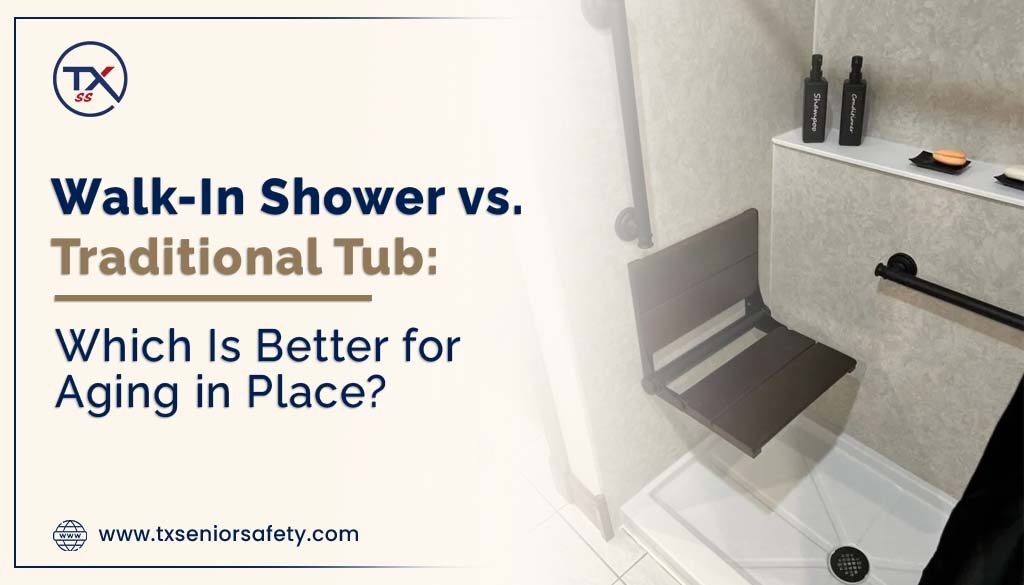
Walk-in showers eliminate that hazard by offering a low or zero-threshold entry. This design allows you to walk straight in, reducing the risk of slipping or tripping. When paired with grab bars, a handheld showerhead, and slip-resistant flooring, a walk-in shower becomes one of the safest and most user-friendly bathroom upgrades available.
On the other hand, traditional tubs can still serve a purpose — particularly for those who enjoy soaking for relaxation or physical therapy. However, they pose higher risks as mobility changes with age.
Accessibility and Comfort
From a senior safety and accessibility standpoint, walk-in showers win by a wide margin. They’re designed to accommodate wheelchairs, walkers, and other mobility aids. Adding a built-in bench allows for comfortable seated bathing, which can make all the difference for those with chronic pain or limited endurance.
In contrast, traditional tubs offer minimal accessibility unless converted with special doors or lift systems, which can be costly and inconvenient. For homeowners in older Texas houses — especially those with narrow bathrooms or awkward layouts — a walk-in shower can maximize space and comfort without sacrificing style.
Cost Comparison: Short-Term vs. Long-Term Investment
One common misconception is that a walk-in shower remodel is too expensive. While the initial cost can be higher than simply keeping a tub, the long-term benefits far outweigh the investment. A safe, accessible bathroom reduces the likelihood of injuries and hospital visits — expenses that can easily surpass the cost of the remodel itself.
At Texas Senior Safety, we design walk-in showers to meet both safety and budget needs. By tailoring each project to the home’s existing layout, we minimize demolition and plumbing costs wherever possible. Traditional tubs may seem cheaper upfront, but for homeowners committed to aging in place, the walk-in shower is the smarter, safer, and more cost-effective solution over time.
Maintenance and Cleaning
When it comes to maintenance, walk-in showers are significantly easier to clean. Their open design, fewer corners, and large tile panels reduce mold buildup and make routine cleaning quicker. With modern waterproof materials, maintenance becomes minimal — ideal for seniors who may struggle with bending or scrubbing hard-to-reach spots.
Traditional tubs, however, require more upkeep. The edges, grout lines, and drain areas are prone to soap scum and mildew buildup. For older adults, the physical strain of cleaning a tub can become a challenge. In humid Texas cities like Houston or San Antonio, where moisture lingers, a walk-in shower with proper ventilation provides a cleaner, more hygienic environment.
Aesthetic Appeal: Modern Style Meets Functionality
Beyond safety and practicality, aesthetics matter. Walk-in showers bring a modern, open look to any bathroom. Frameless glass enclosures, decorative tile, and sleek fixtures make them visually appealing and increase home value. Many homeowners across Austin and Dallas find that converting their tub gives their bathroom a spa-like appearance while improving functionality.
That said, a traditional tub can still be a centerpiece in larger bathrooms, offering classic charm and relaxation value. Some families choose to keep at least one tub in the house for resale purposes or for visiting grandchildren. The key is striking a balance between personal needs and long-term planning.
The Clinical Perspective: Function Over Tradition
From my experience as a Licensed RN and Clinical Liaison, I always remind clients that design choices should support long-term independence. Bathrooms should adapt as mobility changes — not the other way around. Walk-in showers make it easier for caregivers to assist without compromising privacy or comfort.
Traditional tubs often become underused or avoided entirely once balance or flexibility decreases. I’ve seen many seniors resort to unsafe improvisations, such as using towel racks for support or stepping stools for entry — both of which are extremely dangerous. A well-designed walk-in shower removes those risks and restores confidence.
Making the Right Choice for Your Home
Ultimately, the decision between a walk-in shower and a traditional tub depends on your goals, health, and home design. If you value independence, easy maintenance, and long-term safety, a walk-in shower is likely the best choice. If relaxation and soaking are priorities, retaining a tub might make sense — especially in multi-generational homes.
At Texas Senior Safety, we’ve helped hundreds of Texas homeowners design bathrooms that are as safe as they are beautiful. Whether you’re in Dallas, Fort Worth, Austin, San Antonio, or Houston, we bring medical insight, construction expertise, and compassion to every project.
Visit txseniorsafety.com to schedule a consultation or connect with us on Facebook, X, and LinkedIn for expert advice and real-life project inspiration.
Because when it comes to aging in place, your bathroom should be a source of comfort — not concern.