
Exterior Handrails for Seniors
Safer Steps, Walkways & Entrances for Aging in Place
Getting in and out of your home should feel safe and secure. For seniors and individuals with limited mobility, even one or two exterior steps can become difficult to navigate without something sturdy to hold onto.
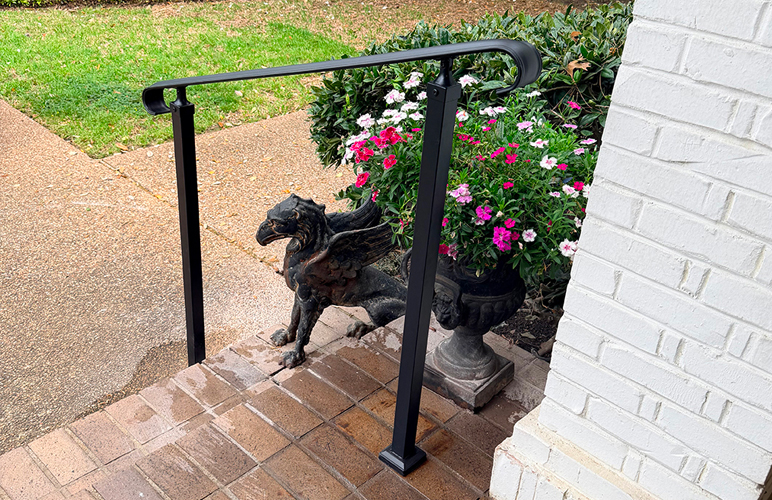
Texas Senior Safety installs exterior handrails designed to improve stability and reduce the risk of falls around your home. Whether you need a handrail beside a few front steps, along a porch or walkway, or at another exterior entrance, we can help determine the safest placement and solution for your individual needs.
Our goal isn’t simply to install a railing. It’s to help you or your loved one move around the home more safely and confidently.
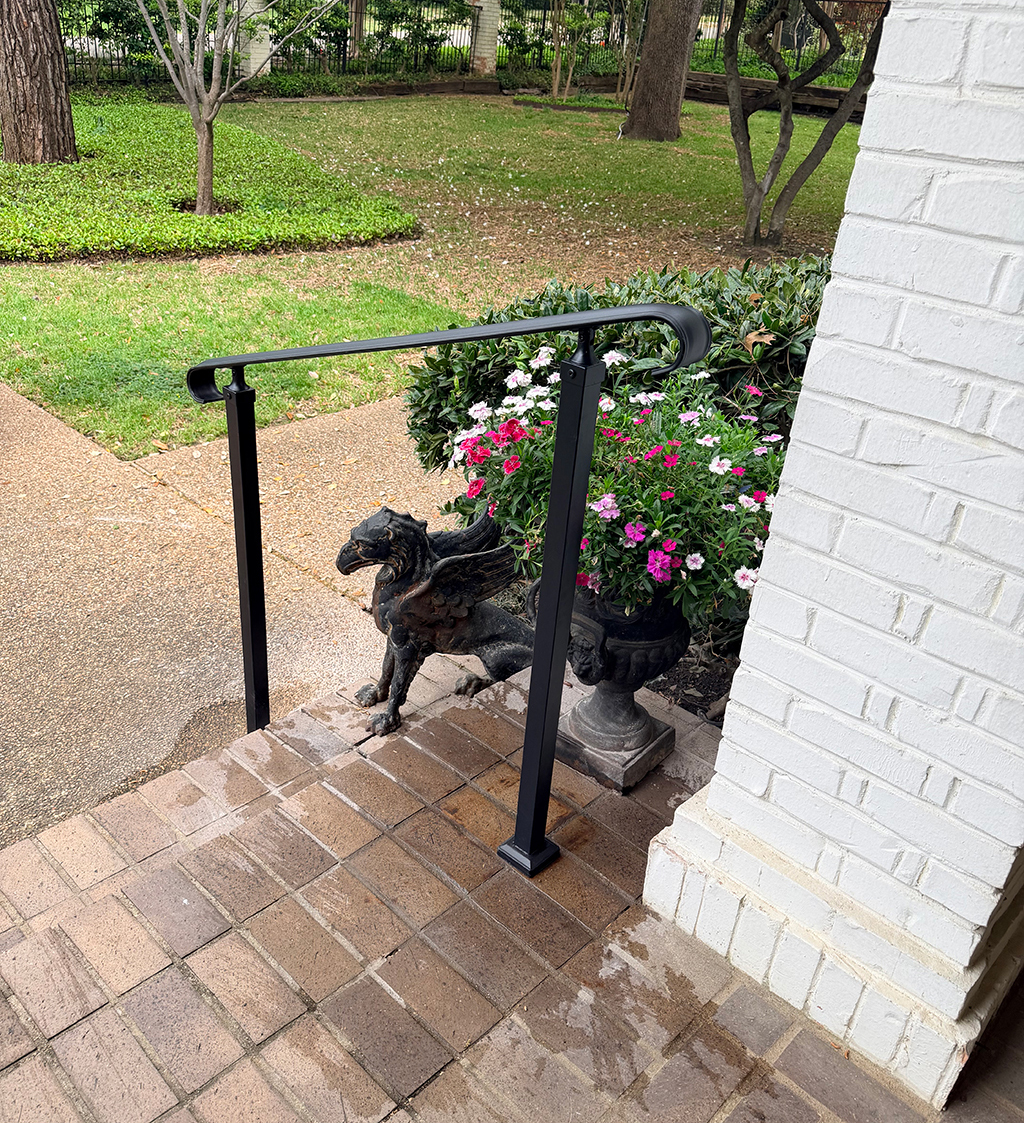
Where Exterior Handrails Can Help
Exterior handrails can provide additional support anywhere changes in elevation, uneven surfaces, or steps make walking more difficult.
Common locations include:
- Front porch steps
- Back and side entrances
- Garage entry steps
- Patio steps
- Walkways with changes in elevation
- Steps leading from driveways or sidewalks
- Deck and porch areas
- Exterior areas where additional support is needed
Even a single step can present a fall risk for someone experiencing balance problems, weakness, arthritis, or reduced mobility.
Handrails for Porch and Entry Steps
Front and back entrances are some of the most important areas to consider when making a home safer for aging in place.
Steps that may have been easy to navigate for years can become challenging as balance, strength, vision, or mobility changes. Rain and other outdoor conditions can make those same steps even more difficult.
A properly positioned exterior handrail gives you a stable point of support when stepping up or down and can make everyday activities such as leaving for an appointment, getting the mail, or entering the home easier and safer.
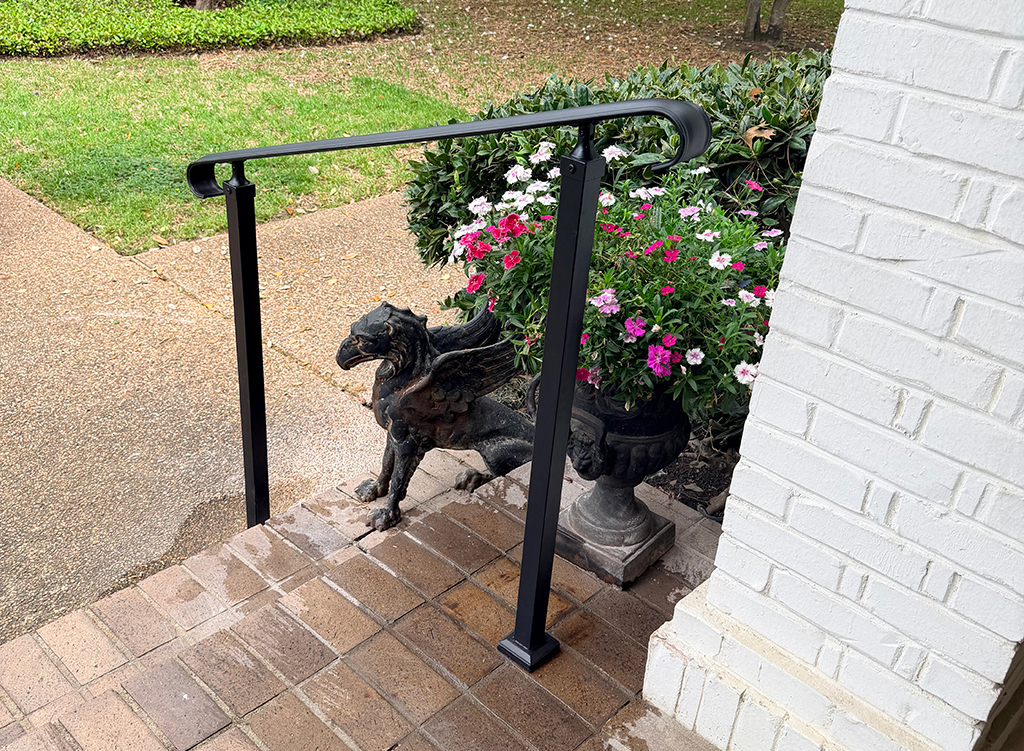
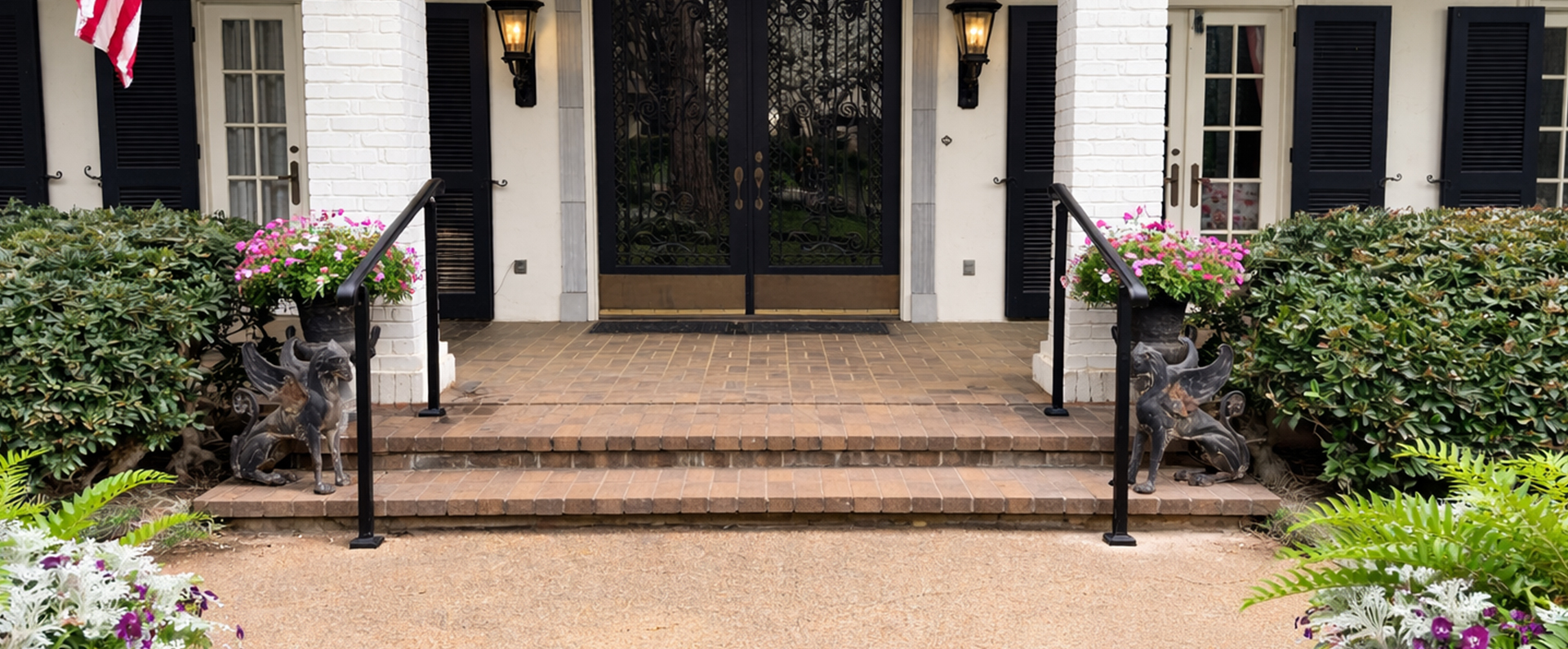
Exterior Handrails for Seniors and People with Limited Mobility
Not everyone uses a handrail in the same way.
Someone recovering from surgery may have different needs than a person using a cane or walker. A senior experiencing weakness on one side may benefit from a different handrail position than someone primarily concerned about balance.
That’s why Texas Senior Safety looks at how you actually move through the area before recommending a solution.
We consider factors such as:
- Number and height of steps
- Existing porch or entry configuration
- Where additional support is needed
- Balance and mobility limitations
- Use of a cane, walker, or other mobility device
- Safe approach to and departure from the steps
- Handrail height and positioning
- Secure mounting and stability
The objective is to create a safer path into and out of your home while helping you maintain as much independence as possible.
Do I Need a Handrail for Just One or Two Steps?
Possibly—and this is an area that is often overlooked.
A person doesn’t need a full staircase to benefit from a handrail. For someone with limited balance or mobility, a single exterior step can be enough to create a fall hazard.
If you find yourself reaching for a door frame, wall, post, another person, or anything nearby to steady yourself when going up or down a step, that can be a good indication that additional support may be helpful.
Texas Senior Safety can evaluate the entrance and recommend whether a handrail or another safety modification would be appropriate.
Part of a Complete Aging-in-Place Safety Plan
Exterior handrails are often just one part of making a home safer.
During a home safety assessment, we can look at how safely you or your loved one moves throughout the property—from the driveway and entrance to the bathroom and other areas inside the home.
Depending on your needs, recommendations may include exterior handrails, grab bars, bathroom safety modifications, improved access, or other aging-in-place solutions.
This approach helps address the home as a whole rather than focusing on a single potential hazard.
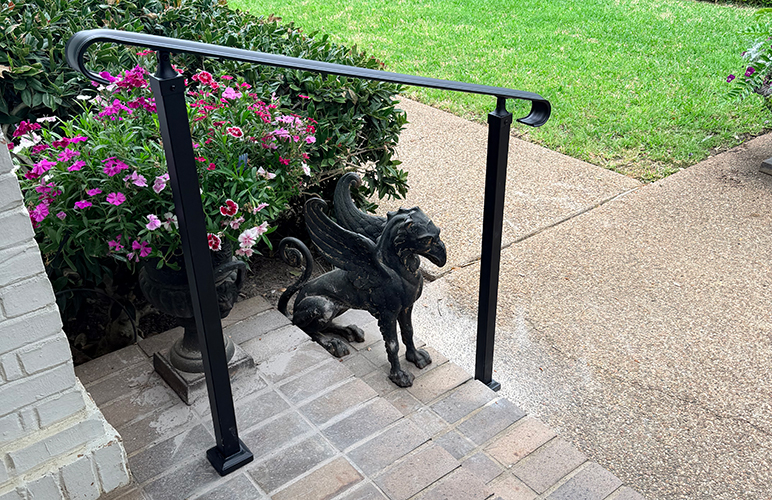
Why Choose Texas Senior Safety?
Texas Senior Safety combines home modification experience with an understanding of the physical and mobility challenges seniors may face.
Ken Elkins is a Licensed Registered Nurse and Mobility Contractor with more than 20 years of experience working with seniors, patients, families, case managers, physical therapists, occupational therapists, and other healthcare professionals.
His experience in clinical care and discharge planning helps Texas Senior Safety look beyond the installation itself and consider an important question:
What does this person need to move through their home more safely?
That perspective helps us recommend home safety modifications based on the individual’s mobility needs and the way they actually use their home.
Frequently Asked Questions About Exterior Handrails
-
What type of exterior handrail is best for seniors?
The best handrail is one that provides a secure, comfortable gripping surface and is positioned where the individual naturally needs support. The right solution depends on the steps, entrance configuration, mounting surface, and the person’s mobility needs.
-
Can you install a handrail for only one or two steps?
-
Where should an exterior handrail be installed?
-
Should exterior steps have handrails on both sides?
-
Can exterior handrails be installed into concrete?
-
Are exterior handrails helpful for someone who uses a walker?
-
How do I know if my parent needs an exterior handrail?
-
Can you evaluate other fall hazards while you're at the home?
Make Entering and Leaving Your Home Safer
You shouldn’t have to feel uncertain every time you approach the steps to your own home.
If you or a loved one is having difficulty safely navigating exterior steps, porches, walkways, or entrances, Texas Senior Safety can evaluate the area and recommend an exterior handrail or other safety solution based on your needs.
Contact Texas Senior Safety today to schedule a home safety assessment or learn more about exterior handrail installation.
